
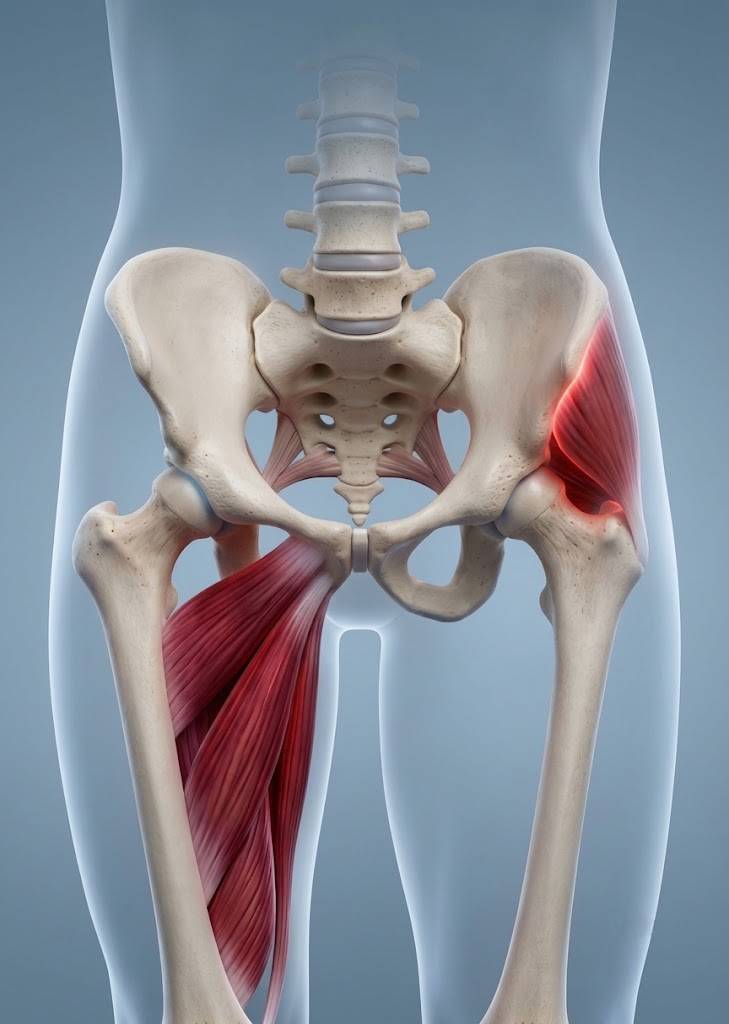
Hip Mobility and Stability Routine for Better Balance and Movement
Strong and mobile hips are essential for balance, movement quality, and injury prevention. Many people focus on stretching but overlook the importance of hip stability and muscle control.
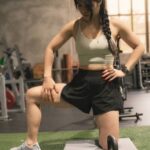
This single-leg hip mobility routine combines balance training, hip stability work, and adductor activation. By maintaining gentle pressure against a foam block or wall, you challenge the muscles responsible for pelvic control and joint stability.
Whether you are an athlete, runner, or simply looking to move better in everyday life, these exercises can help improve coordination, balance, and overall lower-body function.
Watch the full video demonstration here:
Benefits of This Hip Mobility Routine
- Improves hip mobility
- Enhances balance and coordination
- Strengthens hip stabilizers
- Activates the inner thigh muscles
- Improves pelvic control
- Supports injury prevention
- Helps with athletic performance
Exercise Breakdown
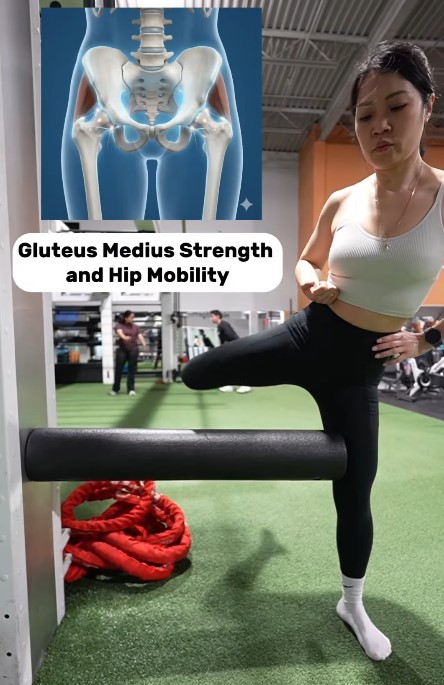
Single-Leg Hip Mobility Pass Over Foam Roller
How to perform:
- Stand on one leg while maintaining gentle inward pressure against a foam roller or block placed between your inner thigh and a wall.
- Lift the opposite knee toward your chest.
- Slowly move the bent leg over the foam roller, bringing it behind your body.
- Reverse the movement and return to the starting position.
- Maintain balance and control throughout the entire range of motion.
Benefits:
- Improves hip mobility through multiple planes of motion
- Enhances single-leg balance and coordination
- Strengthens hip stabilizers
- Activates the adductors and glute muscles
- Improves pelvic control and movement quality
This exercise challenges the hip to move freely while the standing leg works to maintain stability and control. The inward pressure against the foam roller activates the inner thigh muscles and helps improve overall hip function.
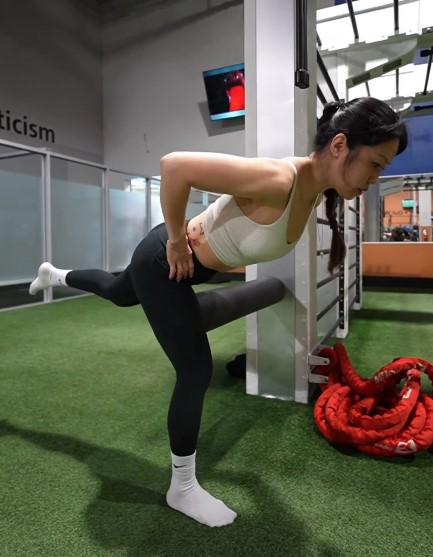
Single-Leg Romanian Deadlift with Adductor Press
How to Perform
- Stand on one leg with a foam roller or block placed between your inner thigh and a wall.
- Maintain gentle inward pressure throughout the exercise.
- Keep a slight bend in the standing knee.
- Hinge at the hips while extending the opposite leg behind you.
- Lower your torso until it is nearly parallel to the floor or as far as your mobility allows.
- Keep your spine neutral and your hips square.
- Return to the starting position with control.
- Repeat for the desired number of repetitions before switching sides.
Benefits
- Strengthens the glutes and hamstrings
- Improves single-leg stability
- Enhances hip and pelvic control
- Activates the adductors of the standing leg
- Develops balance and coordination
- Improves functional movement patterns
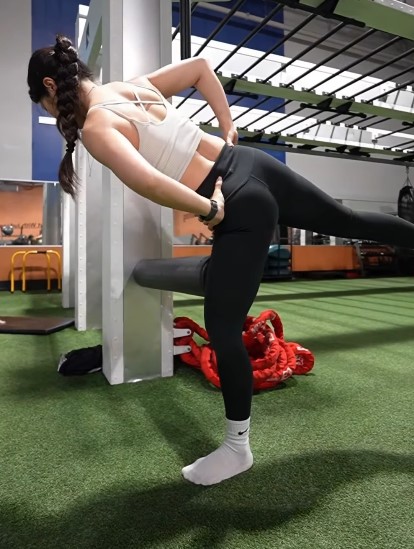
Hip Airplane with Adductor Press
How to Perform
- Stand on one leg with a foam roller or block between your inner thigh and a wall.
- Apply gentle pressure into the foam roller throughout the movement.
- Begin in a hip-hinged position with your torso leaning forward.
- Slowly rotate your pelvis and hips open while maintaining balance.
- Pause briefly at the end of the range of motion.
- Rotate the hips back to the starting position.
- Focus on controlled movement rather than speed.
- Keep your standing foot firmly planted and your core engaged.
Benefits
- Improves rotational hip mobility
- Enhances hip joint control
- Strengthens deep stabilizing muscles
- Improves balance and body awareness
- Increases pelvic stability
- Helps reduce compensation patterns during movement
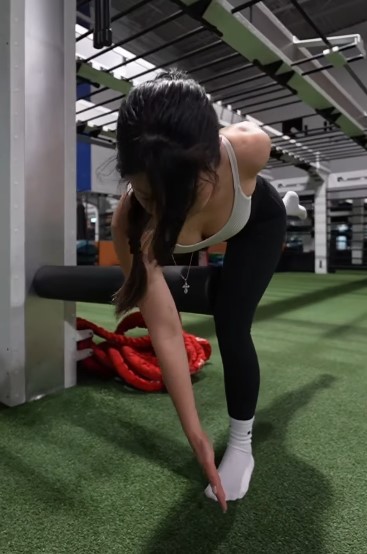
Single-Leg Reach with Adductor Press
How to Perform
- Stand on one leg with a foam roller or block placed between your inner thigh and a wall.
- Maintain constant inward pressure throughout the exercise.
- Keep your standing knee slightly bent.
- Reach toward the floor with both hands while maintaining balance.
- Allow the hips to hinge naturally as you lower your torso.
- Reach as far as possible without losing control or alignment.
- Return to the starting position slowly and under control.
- Repeat on both sides.
Benefits
- Improves balance and coordination
- Develops hip stability
- Strengthens the glutes and core
- Activates the adductors and stabilizing muscles
- Enhances body control during single-leg movements
- Improves movement quality in daily activities and sports
Common Mistakes
- Rushing through the movement
- Losing balance and alignment
- Letting the knee collapse inward
- Forgetting to maintain pressure against the block
- Using momentum instead of control
Who Can Benefit?
- Runners
- Hikers
- Athletes
- Adults over 40
- People recovering from minor mobility restrictions
- Anyone looking to improve balance and movement quality
Hip mobility is not only about flexibility. True movement quality comes from the ability to control the hip through a full range of motion.
Incorporating these single-leg stability exercises into your routine can help improve balance, coordination, and long-term joint health.
The information provided in this article is intended for educational and informational purposes only and should not be considered medical advice.
Always consult with your physician, healthcare provider, or qualified medical professional before starting any new exercise program, especially if you have a medical condition, injury, chronic pain, dizziness, balance issues, cardiovascular concerns, or any other health-related limitations.
Stop exercising immediately and seek medical attention if you experience pain, discomfort, dizziness, or any unusual symptoms during exercise.
Exercise at your own risk and within your individual abilities.