
Traditional Korean Kimchi Recipe
If you love Korean food, homemade kimchi is one of the best recipes to learn. This traditional-style kimchi combines crunchy napa cabbage with daikon, Korean red pepper flakes, garlic, ginger, pear, fish sauce, and green onions to create a deep, spicy, savory flavor.
What makes this recipe special is the homemade rice flour paste and the way the seasoning is worked between every cabbage leaf. The cabbage is first properly salted, then coated with a flavorful Korean chili paste before being packed tightly for fermentation.
The result is spicy, tangy, crunchy, and full of flavor — and you can adjust the fermentation time to get exactly the level of sourness you enjoy.
Watch the Recipe Video
Want to see exactly how I prepare the cabbage, make the kimchi paste, and season every leaf?
Watch the full step-by-step video below and follow along with me as I make traditional homemade Korean kimchi.
Why Make Kimchi at Home?
Store-bought kimchi is convenient, but making it yourself gives you much more control over the ingredients and flavor.
With homemade kimchi, you can:
- Adjust the amount of gochugaru (Korean red pepper flakes) to your preferred spice level.
- Control how salty the final kimchi tastes.
- Choose the fermentation time and level of sourness.
- Use fresh napa cabbage and vegetables.
- Make a large batch that can be enjoyed over several weeks.
- Adjust the recipe to your own taste.
This recipe makes a generous batch, making it perfect for keeping in the refrigerator and enjoying with rice, noodles, Korean dishes, soups, and grilled meats.
Jump to RecipeRecommended Ingredients & Equipment
I use a few specific ingredients and pieces of equipment for this recipe.
Rice flour: I use Thai rice flour for making the thick rice paste.

Gochugaru: Korean red pepper flakes are an important ingredient in traditional kimchi. They provide the characteristic red color and spicy flavor.

Fish sauce: Fish sauce adds saltiness and savory umami flavor to the kimchi seasoning.

Kimchi container: A dedicated kimchi fermentation container with an inner pressing lid makes it easier to keep the cabbage pressed down while it ferments.

You can find the ingredients and equipment I use here:
Jump to RecipeHelpful Tips & Common Mistakes
Don’t skip the salting step
Properly salting the cabbage is one of the most important parts of making good kimchi. It changes the texture of the cabbage and helps it hold onto the seasoning.
Don’t rush the cabbage
The exact salting time depends on room temperature, cabbage size, and how much salt is used. Check the texture rather than relying only on the clock.
Rinse the cabbage thoroughly
Too much salt can make the finished kimchi unpleasantly salty. Rinse the cabbage well after the salting stage and squeeze out excess water.
Let the rice paste cool
Do not mix hot rice paste with the fresh vegetables. Allow it to cool completely before making the kimchi seasoning.
Use Korean gochugaru
Regular crushed red pepper is not the same as Korean gochugaru. Gochugaru gives kimchi its characteristic color, flavor, and type of heat.
Don’t pack the container completely full
Kimchi ferments and produces gases. Leave some space at the top of the container to prevent overflowing.
Keep the kimchi pressed down
Try to keep the cabbage tightly packed and pressed down. This helps minimize unnecessary exposure to air during fermentation.
How Long Does Kimchi Take to Ferment?
There is no single perfect fermentation time for kimchi.
Temperature plays a major role. Kimchi will ferment faster in a warmer environment and more slowly in the refrigerator.
Many people enjoy kimchi at different stages of fermentation. Freshly made kimchi has a crisp, fresh vegetable flavor, while longer fermentation produces a stronger, more sour and complex taste.
Taste it periodically and refrigerate it when it reaches the flavor you prefer.
How to Store Homemade Kimchi
Once the kimchi reaches your preferred level of fermentation, store it in the refrigerator in a clean, tightly sealed container.
Always use clean utensils when taking kimchi from the container.
As it continues to ferment in the refrigerator, the flavor will gradually become more sour and complex.
How to Eat Kimchi
Homemade kimchi is incredibly versatile.
You can serve it as a side dish with:
- Chinese Beef & Celery Stir Fry
- Sticky Garlic Soy Pork Ribs
- Tender Oven-Baked Pork Ribs with Spicy Glaze
- Fried rice
- Korean barbecue
- Noodles
- Dumplings
- Eggs
- Soups and stews
You can also use older, more sour kimchi for dishes such as kimchi fried rice, kimchi stew, and kimchi pancakes.
Jump to RecipeFrequently Asked Questions
What is kimchi?
Kimchi is a traditional Korean fermented vegetable dish. Napa cabbage is one of the most common ingredients, and it is typically seasoned with Korean red pepper flakes, garlic, ginger, green onions, and other ingredients before fermentation.
How long does homemade kimchi take to ferment?
The fermentation time depends on temperature and personal preference. It can begin fermenting within a day at room temperature, while colder temperatures slow the process. Taste the kimchi periodically and move it to the refrigerator when it reaches your preferred flavor.
Can I make kimchi without a special container?
Yes. A dedicated kimchi container is convenient because it helps press the vegetables down, but you can use another clean, food-safe fermentation container. The important thing is to pack the kimchi tightly and leave enough headspace for fermentation.
Is homemade kimchi spicy?
It can be. The amount of gochugaru can be adjusted according to your taste. If you prefer a milder kimchi, reduce the amount of Korean red pepper flakes.

Kimchi
Ingredients
Equipment
Method
- Cut the napa cabbage into four sections and sprinkle salt between the leaves.

- Place the cabbage tightly into a large container.

- Dissolve the remaining salt in 4 L of cold water and pour over the cabbage.

- Place a clean weight on top and leave to salt for 12–24 hours, depending on room temperature.

- Rinse the cabbage thoroughly with cold water and squeeze out excess water.
- Mix rice flour with 450 ml cold water and cook over low heat, stirring constantly until thickened. Cool completely.

- Grate the daikon and mix with 3 tablespoons of gochugaru.
- Blend garlic, onion, ginger, Asian pear, and fish sauce until smooth.
- Cut green onions into approximately 3-inch pieces.
- Combine the daikon, green onions, cooled rice paste, blended mixture, and remaining 5 tablespoons of gochugaru.
- Spread the seasoning paste between every cabbage leaf.
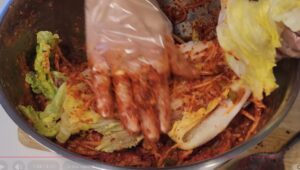
- Pack the seasoned cabbage tightly into a kimchi container.
- Press the kimchi down using the inner lid or a clean suitable weight.
- Allow the kimchi to ferment according to your preferred level of sourness, then refrigerate.
Video
Notes
- The 12–24 hour salting period depends on room temperature and cabbage size.
- Rinse the cabbage thoroughly after salting to remove excess salt.
- Allow the rice flour paste to cool completely before combining it with the vegetables.
- Adjust the amount of gochugaru according to your preferred spice level.
- Fermentation time is not included in the total preparation time because it depends on temperature and personal preference.
- Always use clean utensils and food-safe containers when preparing and storing fermented vegetables.
- Keep the kimchi refrigerated once it reaches the level of fermentation you prefer.
Affiliate Disclosure
Some of the products and ingredients mentioned in this recipe may contain affiliate links. If you purchase something through one of these links, I may receive a small commission at no additional cost to you.
I only recommend products that I personally use or find useful for making this recipe. These links help support the website and allow me to continue creating recipes, cooking videos, and other free content for you.
Thank you for supporting my work!